Showing posts with label gardening. Show all posts

Chickens and the Garden, a symbionic relationship

We have chickens.

I know you know that, I've talked about them enough.

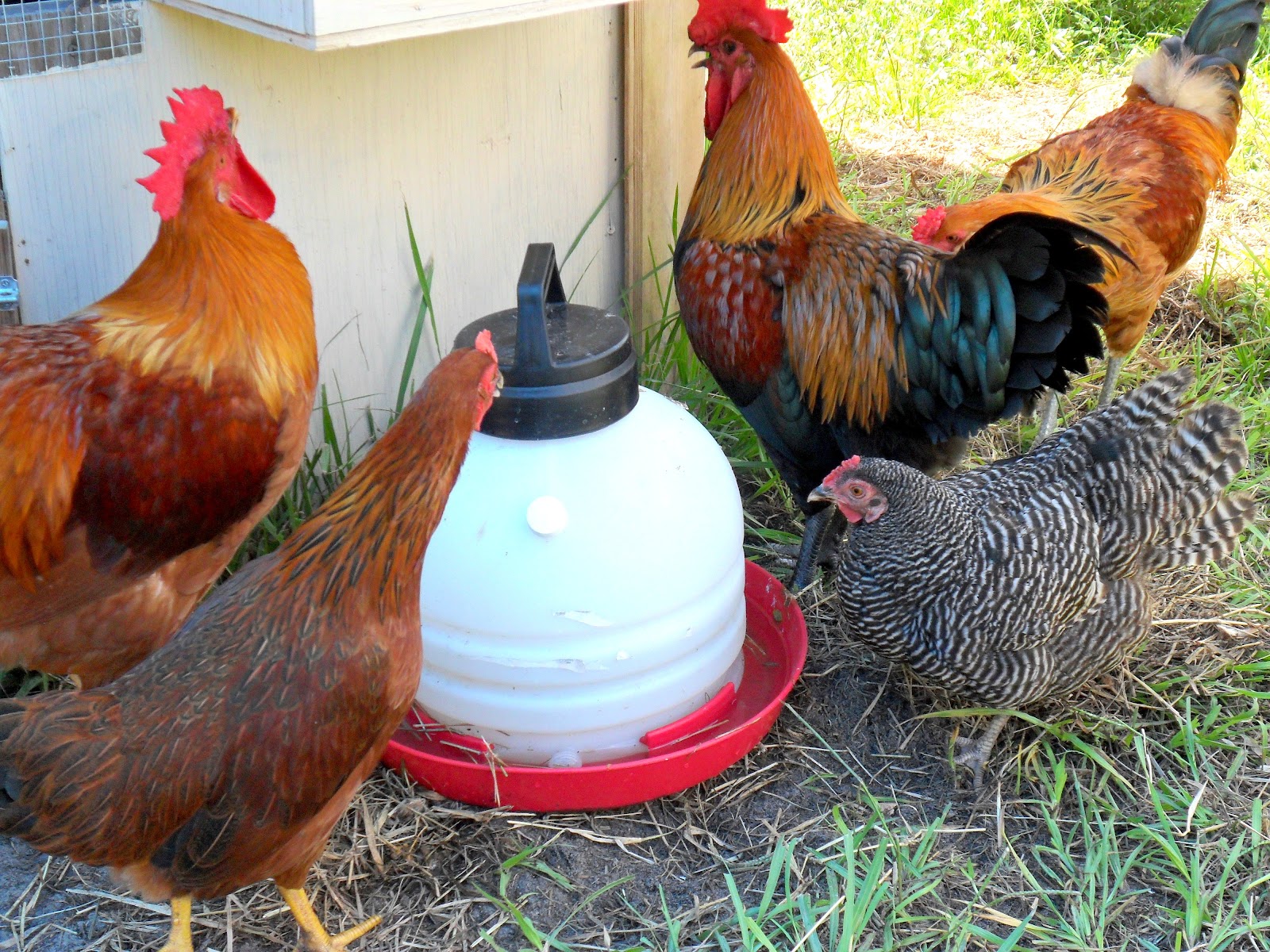
But these chickens are free range chickens, which means they can roam anywhere within our fence line that they so choose. You might even classify them as "backyard chickens" since we live in a suburban area (on a piece of property that time has forgotten in an old agricultural zone, but I digress.)

Several months ago, I read an article that talked about the benefits of having chickens and gardens and in this article as well as in some of the comments that were made, these people swore that you can let your chickens into your garden to roam around and aerate the soil, picking up bugs and slugs. And oh! while they're in there they can fertilize the garden for you!

Wow! Chickens are awesome and great for a garden.

"But wait!" you say,"Don't chickens EAT garden foods?" Well these people say that you really don't have to worry about that, at most all you'll see is maybe a few holes in a couple of the lettuce leaves - no big deal.

Well, I'm not really sure what kind of chickens these folks are referring to but I'm here to tell you MY chickens LOVE tomato plant leaves. And pepper plant leaves. And lettuce. And beet tops. And pea plants.

Sigh. So now I have to figure out how to protect my garden plants from these destructive pests.

Side note: Yes, I know it's November and it seems crazy that I have plants that still need to be planted in the garden, but these are cold weather plants and I live in Florida - the cold weather is only just starting to think about showing up around here, so yes, am just NOW planting my fall garden. It'll be fun to see if it works, don't you think?

Back to the purpose of this post:

I've got these planting trays with my fall seedlings in them, growing wonderful little plants and I swear I have tried to keep them out of reach of the chickens, but they are pretty persistent creatures.

I planted them in the seed trays instead of directly into the garden with the full intention of planting them when they were "big enough" to not be attractive to chickens. This supposedly is when they are no longer seedlings or when they get to be about 6-8 inches high. From what I had read, chickens really liked newly dug soil and would search out and destroy seeds and seedlings, but grown plants just didn't interest them.

Well, not quite. The tomato plant is almost 3 feet high and there is not a leaf left on it. The pepper plant had a baby pepper on it - HAD is the operative word here.

So...what to do? How am I going to protect my plants from total destruction?

Old Head rounded up some 1x2x8's and some chicken wire and we designed a few "seedling cages". Basically these are long boxes, about 2 feet tall and 3 feet wide built out of 1x2 framing. Then he wrapped three sides with poultry wire. These 3-sided cages will sit down over the plants and protect them from the chickens as well as other rodents and possibly even rabbits. If they can't get in, they won't be able to destroy the plants. For the larger plants, he is using garden fencing to surround a few sections, then we will run fencing along the top of the section to box in the plants.

What's that? "Fence them in" you say? Chickens can't fly?

Yup. I've heard that too but no, fencing doesn't work for these chickens. We are lucky to be able to keep them in our yard with the 6 foot fencing that surrounds the property. The two and four foot fences that we have to keep Beau the dog out of certain areas only serves to give them something to sit on while crowing and preening.

So seedling cages it is. They will help protect the plants from being eaten by chickens, rabbits and other pests. Plus we've decided that they might prove helpful as the winter progresses. On nights when it is supposed to freeze, we can drape a blanket over the cage and protect the beet tops, peas and lettuce, which might just allow a few extra weeks of salad fixin's.

Want more info? Click on the subscribe button on the right to be notified when new posts appear. Or add us to your RSS feeds.

It's an addiction, really.

Who knew? Who knew that it would be so compelling...so intriguing...so........dare I say, addicting?

I got on craigslist (not the addiction, although can be somewhat addicting) and was looking at free stuff (somewhat more addicting, but not MY addiction) and there was someone giving away a bunch of old hay. Soooooo  being who I am, I investigate and find out that it's not like it's USED hay, just hay that falls off the bale when they go to feed it to their horses. Dry, stale hay.

PERFECT!

Here's the idea - the pig pen gets a bit ..... um ...... odiferous at times and although mucking it out is an option (and one that is utilized here at Our Aspirin Acres) it just doesn't seem to really keep up with the job. I have FOUR, count them FOUR pigs here and we are a small homestead in the middle of the city. Can you say,"Codes Department?" No really ... I can wave hello to the Code Enforcement guys as they arrive for work in the morning. It's a good thing we're zoned agricultural. Just one of those things that I think slipped through the cracks in new development and not something I want them to reconsider.

Sooooo...... (get back on track, get back on track)


So I made arrangements to go out and get my free hay. My plan is to then spread it all over the pig pen and let them stir it up, into the muck and help to dilute and decompose the ... muck. There really doesn't seem to be a better word for it - I tried. (Muck really IS mucky, by the way).

So I figured, since I was heading in the general direction of most of the agricultural places around here, I'd check craigslist and see if anyone had some laying hens to get rid of fairly cheap.   (aHA!!! finally... I'm finally arriving at the addiction part. I think chickens are addictive. Call me a collector. But I reason it away saying that since we ended up with so many roosters, we are going to have to balance out the flock.)

And since I can't turn down a bargain.. we now have 4 more hens in the hen-house. This time I bought them at laying age so I would be pretty sure that they are not roosters. I even watched the man remove one from the nest of eggs she was trying to hatch. Ok, so I have at least ONE more hen, or a small rooster with motherly instincts.


These are bantam hens; smaller than the other hens that I have, but the size of the eggs that I saw were a very nice size brown egg.

So, without further adieu....Our Aspirin Acres is proud to present.......

The New Hens on the Block!!!!!!!
Woooooohooooooo!!!!!!!!!   (Applause please)


Ok, so I could only get three to pose at one time - I thought that was pretty good. The fourth chicken is also a black and white Barred Rock Bantam. The one in the back is a Rhode Island Red Bantam. 

I was a bit concerned about putting them into an existing flock so I stopped at a produce stand and the nice man behind the counter was happy to give me a couple of super-ripe watermelon from his throw away pile to help "sweeten" the pot.

I chopped the watermelon into several pieces, threw it into the pen to distract the others and let the new chickens out.

There was quite a scuffle as the old girls were realizing that there was some competition and the roosters were all crowing and strutting about, but finally things started to settle down.

Bentley decided he was going to be their keeper during the transition and hung out with them for a while.
No one gets between me and my new hens!
He showed them around the office, and how to find the water cooler.


But then, out came the boss.
Oh, no! Here comes your wife!
Bentley:   I swear, dear...we were just talking!
Mildred:    Mmmm Hmmm... I'm watching you Mister!

Bentley:   Wow, look at this spot on the wall - how interesting!

The others:  Ooh.... Yes....... VERY interesting.....(we got your back, dude).

Wait.... WHAT were we doing?


Want more info? Click on the subscribe button on the right to be notified when new posts appear. Or add us to your RSS feeds.

Encyclopedia of Country Living - Thanks Sharon

Hey everybody,
One of our readers, Sharon, has recommended her "homesteading bible", The Encyclopedia of Country Living: An Old Fashioned Recipe Book by Carla Emery. No, she swears it's not a recipe book. And since we, around here are always open to suggestions and LOVE information I thought I'd pass along the tip.

I've hunted down a couple of links for it on Amazon if anyone is interested.


Old fashioned recipe book: An encyclopedia of country living

Old Fashioned Recipe Book: An Encyclopedia of Country Living

Old Fashioned Recipe Book

Old Fashioned Recipe Book: An Encyclopedia of Country Living

And if all of these have been sold out, click here to search for more.
Search Amazon.com for Carla Emery's Old-fashioned Recipe Book


Want more info? Click on the subscribe button on the right to be notified when new posts appear. Or add us to your RSS feeds.

Growing Peppers

For those of us in the south - 'tis getting to be the season. Straight from Mother Earth News, "Growing Peppers"
Growing Peppers

Composting for Rich Soil


Last spring, we starting this compost bin. Just a rough frame with chicken wire fencing stapled to it. It worked great, though for yard leaves, garden waste, tea bags, coffee grounds, and anything else we could think of to use to get our compost started.

The leaves in the yard were abundant and I had read that to start a compost pile off, put in dry leaves and a little dirt, then add the "green" stuff such as recently cut grasses or leaves that are still green or anything wet such a kitchen scraps.  We put in kitchen scraps that I had been saving, peelings from cucumbers, potatoes, carrots or any other vegetable that needed to be peeled. Pieces of broccoli stalks, onion peels and any produce that was going bad in the refrigerator. We also added our daily coffee grinds and tea bags as well as shredded paper.

At some point during that first few weeks, our neighbor donated some horse manure that was piling up in his yard from their horse. We mixed that in and added a few garden  scraps as they became available.

We were very dilligent, at first, watering the compost pile every time we watered the garden and turning the compost each week, but that kind of slacked off after a while.  We stopped adding materials to the bin after about 2 months because we knew that eventually we would want to take the compost out and use it, which we wouldn't really be able to do with large clumps of undecomposed materials in it.

For the most part, the compost bin has been untouched since, roughly, late July or early August. It has condensed itself down a few feet with all of the rich, decomposed materials in there, so it should be ready to use in the next garden.  I can't wait to mix all that black, rich goodness into this new garden spot.

 A few sites I found helpful:

Composting101

Composting for Organic Gardening

A great and very informational site from the Garden of Oz


To learn more, click on the subscribe button on the right to be notified when new posts appear. Or add us to your RSS feeds.

Building Chicken Coops


A simple, quick and easy chicken tractor design by Kenny Point, Organic Vegetable Gardening Expert, who says of chicken tractors, "What has wings but doesn’t fly? And a set of wheels that never see the road? ... This contraption will make short work of even the thickest tangle of weeds, and can cultivate the garden’s soil at the same time that it applies a layer of nitrogen rich organic fertilizer. Did I forget to mention that it also eliminates bugs, grubs, and the tiniest weed seeds?" Sounds like a great reason to raise chickens even if you didn't get fresh eggs!

So, as already mentioned, we will be raising chickens this year so I've been looking at TONS of chicken coop ideas, including tractors (movable coops - on wheels), which is probably the type that we will be making. Ken's idea though, is to make a pen that is tall enough for us to walk in, yet light enough to put on wheels and move around the yard. The idea is that the chickens help to weed, de-bug and aerate the soil in an area, then are moved around the yard to the next site. The chickens are happy, we're happy and it just sounds like an all-around good idea.

Chicken Tractor Gallery by The City Chicken    

Chicken Coop of the Month at The City Chicken. There are a lot of really unique and ingenious ideas and designs for building chicken coops and accessories for coops.

Pictures of various homemade chicken coops on Backyardchickens.com

A few DIY chicken coop designs by Silk Creek Alpacas that include an interesting nesting box design with a nice perch/walkway design plus a simple to make bent mesh design for a chicken tractor.


To learn more, click on the subscribe button on the right to be notified when new posts appear. Or add us to your RSS feeds.


Putting up Welded Wire Fencing

All of the boxes and furniture are moved over from one house to the other, and yesterday he spent most of the day taking down the welded wire fencing at the old house and reinstalling it around the new property. We have an almost completely fenced in area in the front of the house for the dog to run. Beau (the Basset Hound) will be very happy. He will be able to follow his nose wherever it wants to take him until he hits a fence-line.


The thing about welded wire fencing is that it is sturdy enough to keep out almost anything that you don't want in your yard, except the most persistent animals and it wears very well. The fencing that we put up last year is in great shape - no rusting or breakages. Weld wire fencing comes in various heights. We chose the four feet high fence because it suited our needs well - it kept our Basset Hound inside the fence and most of the garden critters out. It also helped to keep the next-door neighbors dogs on their side of the fence. As a secondary precaution we fenced in our vegetable garden as well, last year, so that it would be protected from the dogs, and on a side note, we didn't have any problem with rabbits, or other small animals in the garden. When we installed the garden fence, we left about one foot at the top un-stretched. I had heard that keeping the garden fence loose will help to prevent raccoons from climbing and since we didn't have any problems with raccoons in our garden last year, I guess it helped. Our resident, very large, raccoon simply stuck with throwing things around on the deck and trying to get into the garbage shed.

Learn how to install a weld wire fence. 


To learn more, click on the subscribe button on the right to be notified when new posts appear. Or add us to your RSS feeds.

Christmas Tree Farms in Florida


Just thinking. This might be an idea for some of the land here. Christmas tree farming!  It takes 3 to 6 years to grow a tree from seed here. If nothing else, I'll have a bunch of pine needle mulch!  More on this later. Lots to explore in tree farming. We'll have to find out where to get seedlings, (or, heaven forbid - seeds), learn to prune them to get them to take shape over the years to make a perfect Christmas tree shape, and we'll have to find out if there is any licensing or restrictions for this kind of thing.

In the meantime, follow the link to information on Christmas Tree Farms in Florida that are already in operation. Get your fresh Christmas tree the old fashioned way - picking it out and cutting it down with the family. Support your local farmers!

To learn more, click on the subscribe button on the right to be notified when new posts appear. Or add us to your RSS feeds.

Plans for the Homestead - How to House the Pig and Chickens

Excerpt from a letter to my sister:

So about the moving. The couple next door moved out and since the landlord owns the three houses on this street, we asked if we could move in there. It is the last house on the road and backs up to the "Lake" and the swamp area that surrounds it. The house we are in now also backs up to the "Lake", but the bunch of nothing behind this house is much smaller than the bunch of nothing that is behind THAT house. We'll have a total of about 2.75 acres with about 1.5 usable (non-swamp land). The rest is swamp or will have to be seriously cleared. I like the land, though, because everything from the house to the back of the property is covered by great big Live Oak trees. The only part that doesn't have trees is the (roughly) 1/4 acre front yard. Which is where we will be growing our alfalfa and corn to feed our pig. Plus, I'm getting chickens. The house has a small fenced in area off of the back porch that the previous tenant made using chain link fencing and buried telephone poles around the perimeter to keep their dogs in. They were diggers so they had to come up with a way to keep them in. So it should work out perfectly for the pig when it's little, then as it becomes older (and smellier) it will move out back to an area that is half built now with a shaded area that used to be the horse paddock. We will reinforce that with "hog panels" and make that the "big pig" area. Add a little extra fenced area and he will have plenty of room. That's where the pigs will (oops, sorry pig - no "s") will be until they (I mean he or she) are (I mean is) big enough to be magically turned into bacon.     Translation: The cute little piglet starts to become a pain, we then banish him to the area where we don't have to see him every time we walk out the back door. He takes care of the feeding and care. Then, one day we get another cute little piggy in the side pen. Sometime during that time period, we get a freezer full of meat. Viola! Pig farming!


The chickens are strictly for eggs and pest control. We need something to help control the bugs that thrive in the swamp (and maybe those hornworms that we had such a problem with in our garden last year.) We haven't gotten the chicken coop worked out yet, but we are thinking about making one that is on wheels so they can be moved from area to area around the property so they don't exhaust the resources in any one place. I personally will be setting them free once in a while to let them roam the yard since, as my friend who has chickens says - and Mom always used to say "chickens always come home to roost". So, the idea is that once they get used to their roost, I let them out during the day, they eat the bugs and stuff (and what we feed them) scratch up and aerate the soil around the place and they go back into their roost at night, where we close them in securely away from coyotes and such. I'll let you know how that works.

We're Moving

The house next door just opened up and we will be moving into it. I know, who the heck moves next door? We do. We will give up our just under 1/2 acre piece of land for a 2.75 acre piece.  However... (there's always a catch), more than half of it is swamp land, so it's really only about 1.5 acres of land that we can use. Unless, of course, we can come up with something to do with it.

How do you grow rice?


How Does Your Garden Grow?


The first plantings


Plants and seeds two weeks after planting


About 4 weeks


First baby zucchini


corn


the garden, starting to get out of control, but we're hanging in there


canteloupe plant


bush beans


Some pics of the vegetables as they grew in the garden. It seemed that things were going along pretty well, until the heat and the middle of summer hit.


Vegetable Garden Planning

This was the plan that I drew up (click on it to see a bigger version). Having not planted a garden in several years and back then I only guessed, I thought this was a pretty well thought out garden. I accounted for plenty of room for everything. Which, as it turned out wasn't really all that far off - but cherry tomato plants are not smaller than real tomato plants and tomato plants will grow to about four feet wide and tall or larger.

Note to self: leave more room for tomato plants next time.


Oh, yes, and as it turns out, potatoes, parsnips and carrots are actually fall plantings in Florida, so this layout changed by the time it was planted. 

The Gardening Adventure

So, last spring we decided that we would try our hands at gardening. I checked the University of Florida Extension website to find out when to plant what and devised a schedule according to their recommendations. I drew out a to-scale plan of the garden and he dug out the area, mixed the dirt and manure, plotted the garden, fenced the garden and prepared for planting.

I bought seeds and started them indoors by "chitting" them - first time I'd heard that term. Basically it is the process of presprouting the seeds – but I like the word; chit.  After they sprouted,  I planted them in little peat pots and watched them grow until they were ready to plant outside.

Notes to self: (1) peas don't "chit" well - just plant them into the garden. (2) Corn can be chitted, but in Florida it's kind of a waste of time because I don't have to wait as long as those northerners for the frost to leave. (3) Pole Beans grow really, really, really long! A four foot fence is not tall enough to accommodate their growth.